
Smile line and smile arc
We look at the relationship between the curve of your lower lip and the edges of your upper front teeth when you smile. Lip movement and tooth display help us consider a suitable tooth length.
Ceramic treatment planned around your smile, with a choice of tooth shape, shade and translucency.
We assess your lip line, how your teeth show when you smile and their harmony with your face. Your ceramic restoration is planned around your preferences, considering shade, shape, translucency and comfortable chewing.
SMILE DESIGN
We discuss the look you would like to achieve, then review photographs and dental records together. How your teeth appear in a natural smile is part of the design.
We look at the relationship between the curve of your lower lip and the edges of your upper front teeth when you smile. Lip movement and tooth display help us consider a suitable tooth length.
We assess the length, width, inclination and left-to-right balance of the front teeth. Shapes are refined around your preferences, such as rounded contours for a softer appearance.
Alongside gum display and harmony with neighbouring teeth, we assess your bite and how easily the area can be cleaned. Planning considers both appearance and function.
DESIGN & CASES
Before-and-after photographs and design guide lines illustrate front-tooth shapes and their relationship with the smile.
This case brings the initial appearance, tooth-shape design and restored appearance into one image. Look at the length and width of the front teeth and the curve formed by their edges.
Photographs and digital designs help us discuss front-tooth shapes and the look of your smile. The design serves as a reference; the final shade and shape are refined according to your oral condition and the try-in assessment.
The guide lines illustrate the design approach and are not actual measurements.
Treatment options and results vary with your oral condition. We will discuss a suitable approach at your consultation.
About this case
Anterior aesthetic restoration and DSD smile design
The following is general guidance for similar concerns. It does not describe the treatment, duration or fees actually recorded for this patient.
The smile assessment considers the lip curve, front-tooth proportions and visible gums, alongside the appearance you hope to achieve.
Photos and oral records help communicate the proposed color, shape and alignment before suitable orthodontic or restorative options are considered.
The treatment plan also depends on tooth and gum health, remaining tooth structure and the bite.
Usually around 2–3 visits for the restoration phase; preliminary treatment is separate
Laboratory fabrication generally takes about two weeks. Treatment for decay, root canals or gum disease beforehand adds time and visits.
See the treatment processThese are our current reference fees, not the bill for this case. The applicable plan is determined after examination and diagnosis.
All listed fees include tax. Required examinations or additional procedures may affect the total. We explain inclusions and additional charges at your examination.
View fees and what is includedDesign images are a guide for discussing the intended result. Actual color and shape can vary with oral conditions and materials.
Follow-up considers both smile appearance and the bite. Continue cleaning and regular dental reviews, and discuss any changes or concerns.
References for the general treatment guidance
The upper photograph shows the teeth before treatment; the lower photograph shows them after treatment. Compare the shade, contours and balance between the front teeth.
Treatment options and results vary with your oral condition. We will discuss a suitable approach at your consultation.
About this case
Anterior veneer case
The following is general guidance for similar concerns. It does not describe the treatment, duration or fees actually recorded for this patient.
Assessment includes front-tooth color, shape and small gaps, together with the tooth surface available for bonding and the bite.
A thin restoration is bonded to the front of the tooth. Planning considers thickness and preparation, with color, shape and fit checked before completion.
Decay or gum disease needs treatment. Alternatives may be considered for people with significant grinding or a deep bite.
Usually around 2–3 visits for the restoration phase; preliminary treatment is separate
Laboratory fabrication generally takes about two weeks. Treatment for decay, root canals or gum disease beforehand adds time and visits.
See the treatment processThese are our current reference fees, not the bill for this case. The applicable plan is determined after examination and diagnosis.
All listed fees include tax. Required examinations or additional procedures may affect the total. We explain inclusions and additional charges at your examination.
View fees and what is includedTooth preparation is irreversible. Sensitivity, chipping, cracking or debonding may occur and can require repair or replacement.
Clean between the teeth and around the veneers daily, and avoid forcefully biting hard objects with the front teeth. Discuss any grinding with the dentist.
References for the general treatment guidance
These reference photographs can help you discuss the overall impression of a smile and the shade and shape of the front teeth.
CLINICAL CASES
These front tooth restoration cases were treated at DIGITAL-L. View before-and-after photos and records taken from different angles.
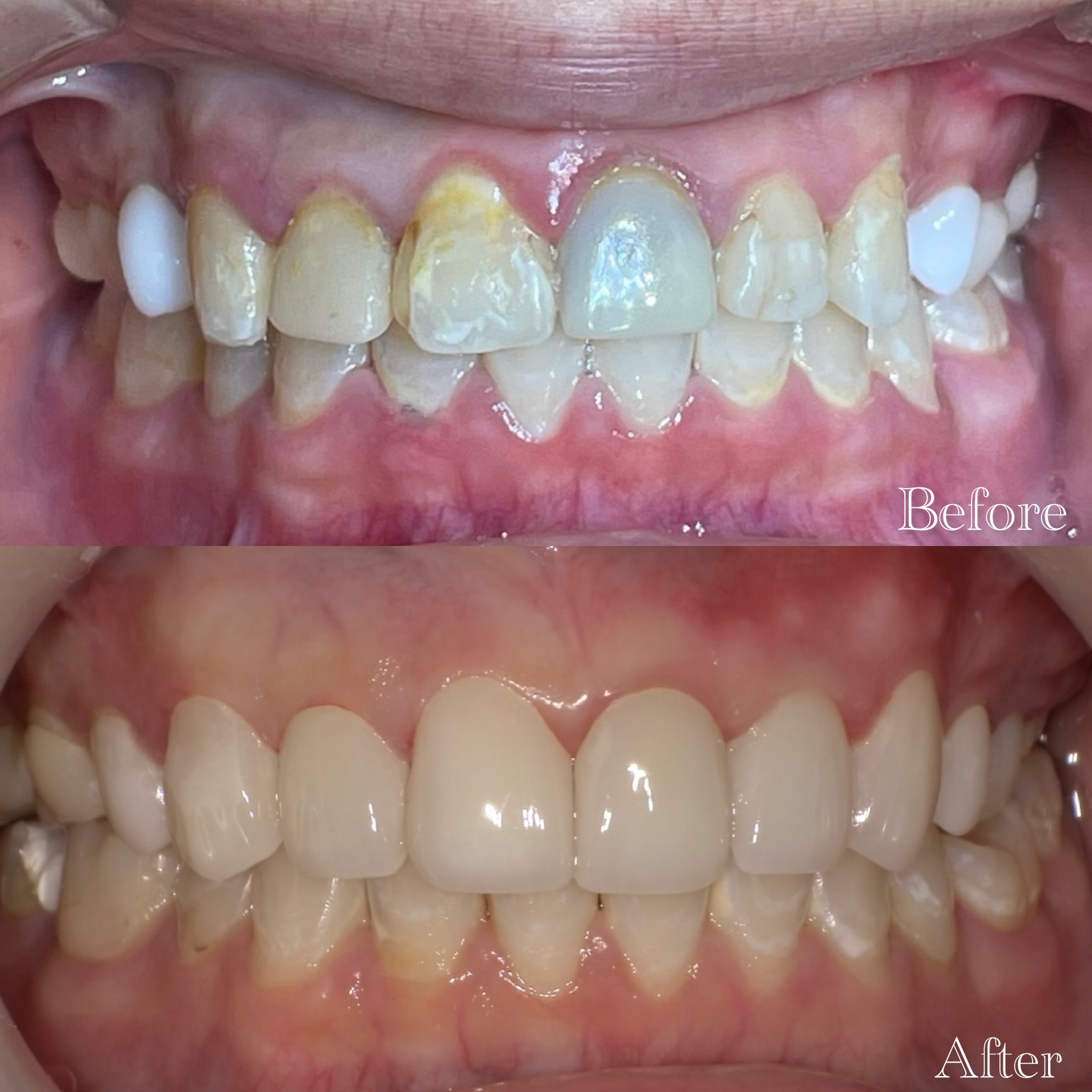
CASE 01
Compare front-view photos from before and after treatment.
About this case
Front tooth restoration: before and after
The following is general guidance for similar concerns. It does not describe the treatment, duration or fees actually recorded for this patient.
Restoration planning considers the remaining tooth structure, gums and bite, as well as chips or discoloration.
Depending on the extent of repair, options may include fillings, veneers or crowns. Planning also considers tooth preservation and cleanability alongside color and shape.
Decay and gum health are assessed, with other care included when needed. The suitable restoration is determined through examination and tests.
Usually around 2–3 visits for the restoration phase; preliminary treatment is separate
Laboratory fabrication generally takes about two weeks. Treatment for decay, root canals or gum disease beforehand adds time and visits.
See the treatment processThese are our current reference fees, not the bill for this case. The applicable plan is determined after examination and diagnosis.
All listed fees include tax. Required examinations or additional procedures may affect the total. We explain inclusions and additional charges at your examination.
View fees and what is includedSensitivity, chipping or loss of the restoration can occur. Repair or replacement may be needed.
Clean around the restored tooth and between the teeth daily. Regular reviews check the bite and restoration.
References for the general treatment guidance
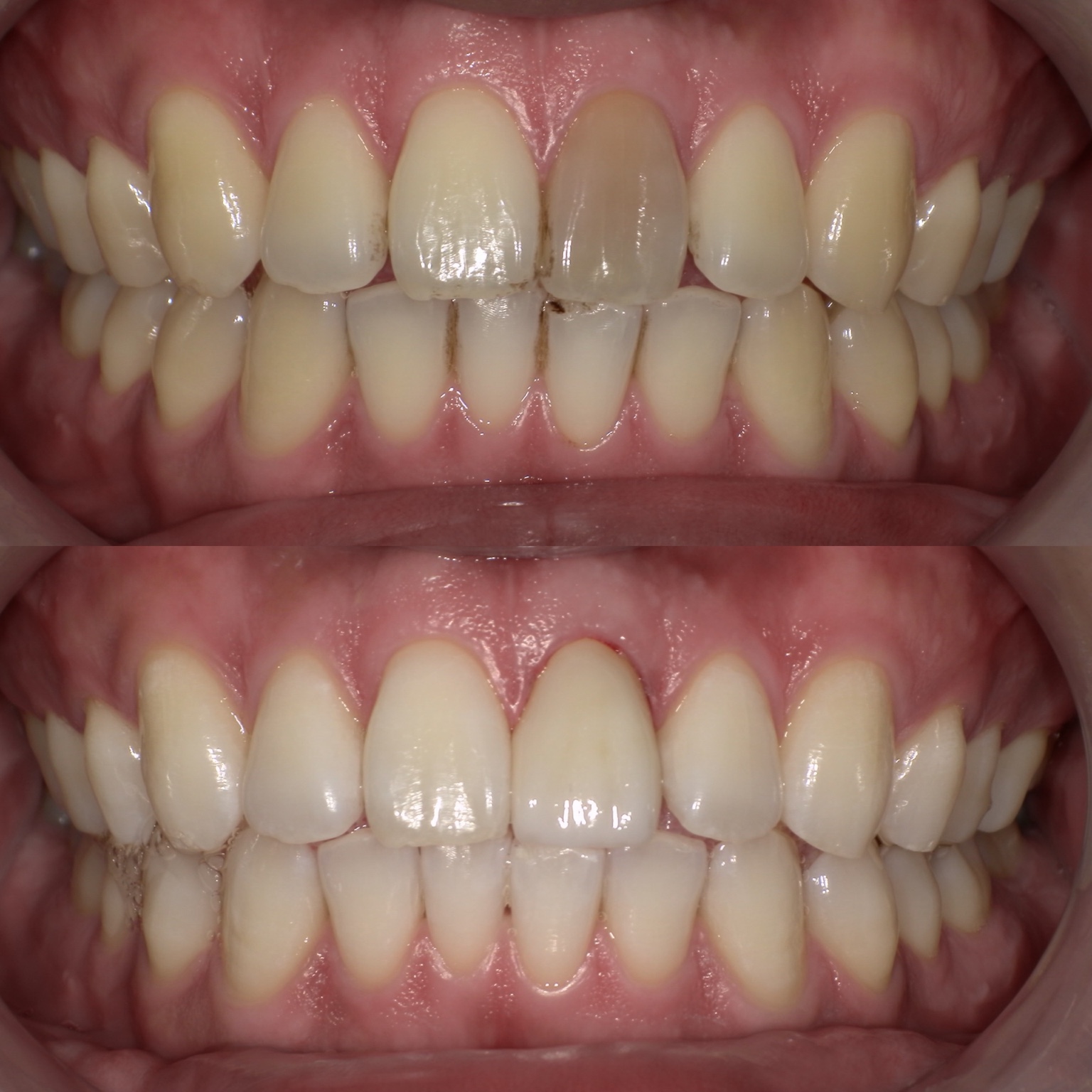
CASE 02
Photos of the front teeth, viewed straight on, before and after treatment.
About this case
Front tooth restoration: front-view photos
The following is general guidance for similar concerns. It does not describe the treatment, duration or fees actually recorded for this patient.
Restoration planning considers the remaining tooth structure, gums and bite, as well as chips or discoloration.
Depending on the extent of repair, options may include fillings, veneers or crowns. Planning also considers tooth preservation and cleanability alongside color and shape.
Decay and gum health are assessed, with other care included when needed. The suitable restoration is determined through examination and tests.
Usually around 2–3 visits for the restoration phase; preliminary treatment is separate
Laboratory fabrication generally takes about two weeks. Treatment for decay, root canals or gum disease beforehand adds time and visits.
See the treatment processThese are our current reference fees, not the bill for this case. The applicable plan is determined after examination and diagnosis.
All listed fees include tax. Required examinations or additional procedures may affect the total. We explain inclusions and additional charges at your examination.
View fees and what is includedSensitivity, chipping or loss of the restoration can occur. Repair or replacement may be needed.
Clean around the restored tooth and between the teeth daily. Regular reviews check the bite and restoration.
References for the general treatment guidance
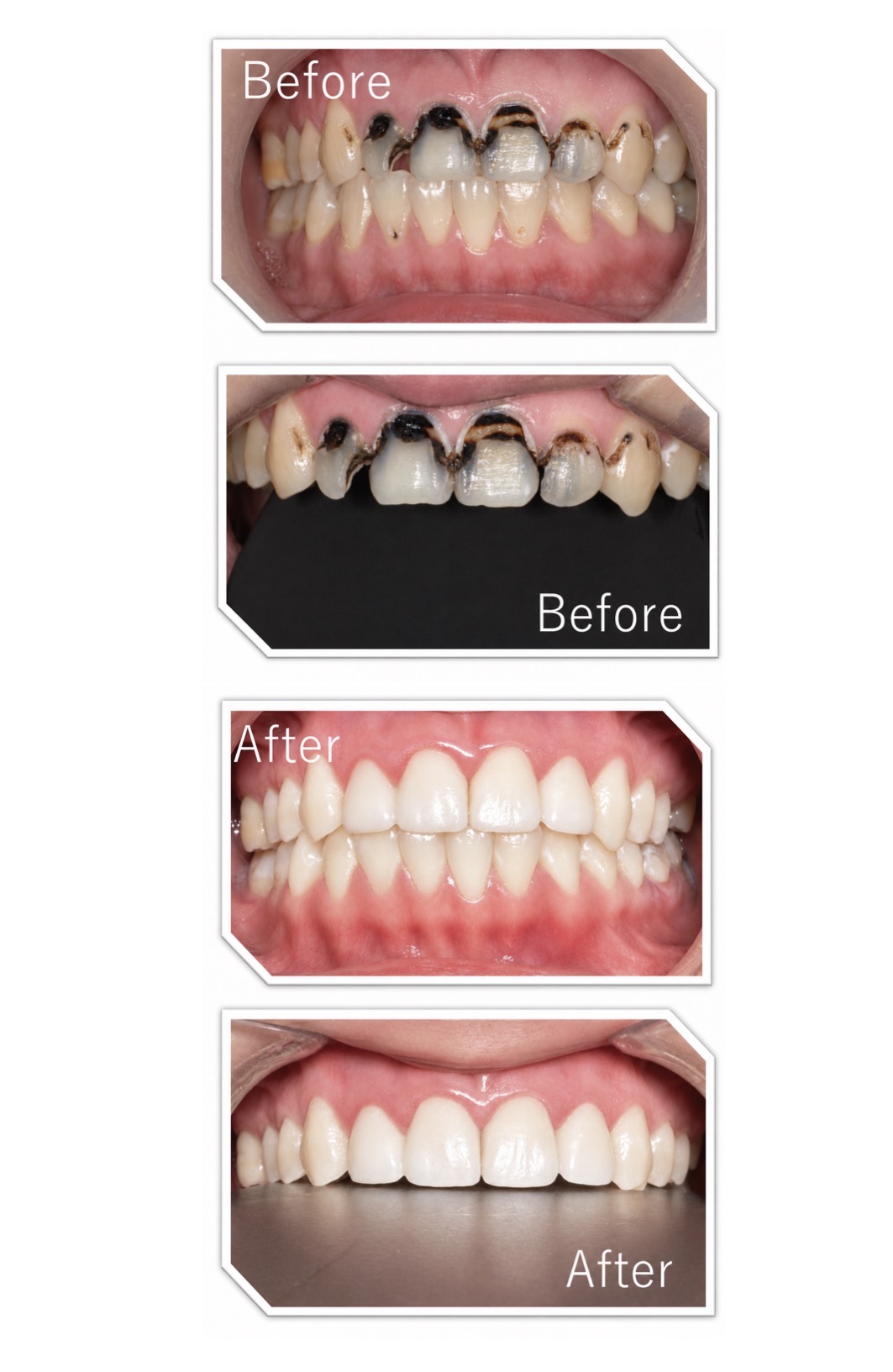
CASE 03
Two photos show the teeth before treatment, and two show them afterward.
About this case
Front tooth restoration: different angles
The following is general guidance for similar concerns. It does not describe the treatment, duration or fees actually recorded for this patient.
Restoration planning considers the remaining tooth structure, gums and bite, as well as chips or discoloration.
Depending on the extent of repair, options may include fillings, veneers or crowns. Planning also considers tooth preservation and cleanability alongside color and shape.
Decay and gum health are assessed, with other care included when needed. The suitable restoration is determined through examination and tests.
Usually around 2–3 visits for the restoration phase; preliminary treatment is separate
Laboratory fabrication generally takes about two weeks. Treatment for decay, root canals or gum disease beforehand adds time and visits.
See the treatment processThese are our current reference fees, not the bill for this case. The applicable plan is determined after examination and diagnosis.
All listed fees include tax. Required examinations or additional procedures may affect the total. We explain inclusions and additional charges at your examination.
View fees and what is includedSensitivity, chipping or loss of the restoration can occur. Repair or replacement may be needed.
Clean around the restored tooth and between the teeth daily. Regular reviews check the bite and restoration.
References for the general treatment guidance
These photos show individual cases treated at our clinic. Treatment methods, duration, fees and results vary from person to person.
SHADE & MATERIALS
Would you like a natural blend or a brighter smile? We discuss your preferences and consider neighbouring teeth and your lips when choosing shade and surface character.
We discuss the degree of whiteness as well as colour tones, including warmer shades. When restoring a single tooth, blending with its neighbours is especially important.
Teeth of a similar brightness can look different because of translucency and depth at their edges. We consider the material, its thickness and the colour of the underlying tooth together.
Fine surface texture and gloss contribute to a natural appearance. Shade, shape and bite are checked at the try-in.
The shade and translucency illustrations are explanatory examples. Actual colour is assessed using shade guides and in-mouth checks during treatment.
All-ceramic restorations are made from ceramic without a metal backing. Options include glass ceramics and zirconia, with differences in translucency, masking of the underlying tooth and required thickness.
Natural translucency and shade
Lithium disilicate is one example of a glass ceramic, available in different levels of brightness and translucency.
Balancing strength and appearance
Zirconia is also a ceramic. Some types prioritise strength and others translucency; products within this category do not all have the same properties.
We discuss blending with neighbouring teeth or changing brightness, while checking the underlying tooth shade.
We plan the restoration around the thickness needed for the desired shade and the condition of the remaining tooth.
We assess where biting forces act and the extent of treatment, considering appearance alongside the strength required.
Pressing, CAD/CAM milling and ceramic layering are fabrication methods. The chosen material, fabrication process and surface finishing all contribute to shade and texture.
Suitable materials and products depend on your teeth. At your consultation, we explain the available options, costs and intended shade and shape.
RESTORATION
The right approach depends on which part of the tooth needs restoring and how much tooth remains. We consider the bite and your preferences when recommending treatment.
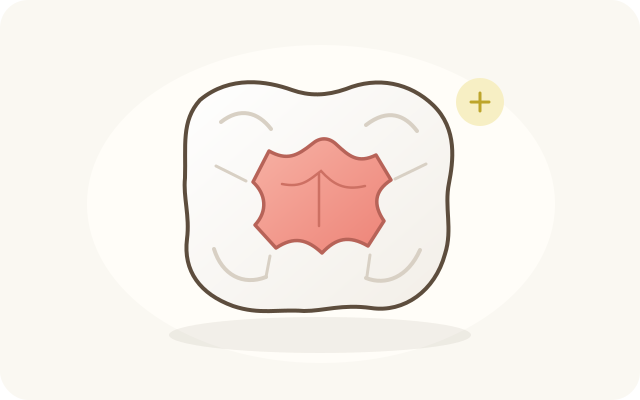
A custom filling for part of the tooth
An inlay is made to fit a cavity within the tooth and bonded into place. It restores the missing part while retaining the surrounding tooth structure.
For a partial defect; suitability depends on its size and location.
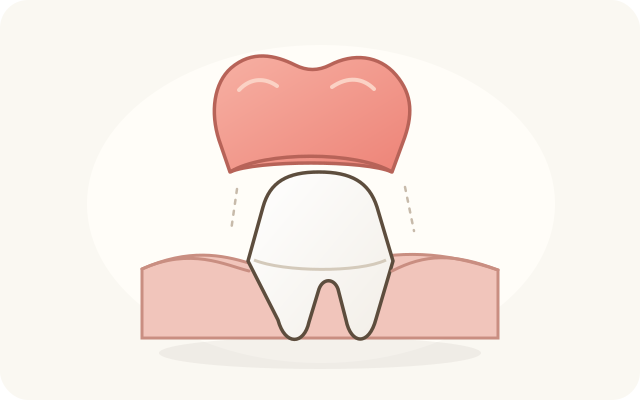
A cap over the prepared tooth
A crown fits over a prepared tooth to restore its shape and biting function. It may be recommended when a larger amount of tooth has been lost.
For larger defects or teeth needing more extensive coverage.
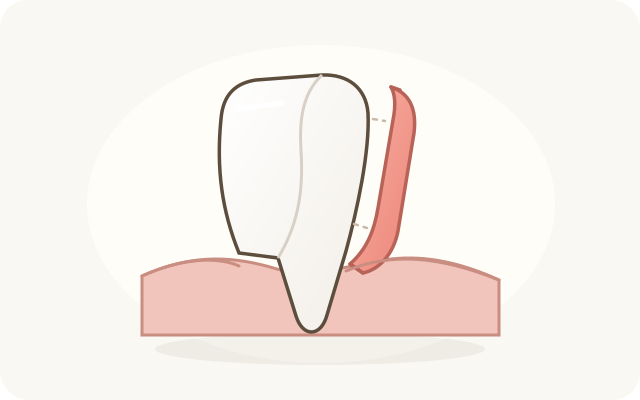
A thin covering on the front surface
A thin restoration is bonded to the front of the tooth to improve its color or shape. Tooth preparation is usually needed, and suitability depends on the tooth and bite.
Primarily for appearance; veneers do not move teeth like orthodontic treatment.
We recommend a restoration after examining the tooth and completing any necessary tests. A smaller cavity may be suitable for a different type of filling.
At the first visit, we discuss your preferences and oral condition and review photographs and designs together. Shade, material and costs are discussed before fabrication, with appearance and bite checked at the try-in.
First visit
We check the defect, remaining tooth and bite, then explain which restoration is suitable, the material options and costs.
Preparation visit
Any necessary cavity treatment or core work is completed before shaping the tooth. If anesthesia is needed, we check its effect before proceeding.
The same visit and fabrication stage
We record the tooth shape and agree on the appearance. Laboratory-made restorations usually take around two weeks; a temporary restoration is placed when needed.
Fitting appointment
We check fit, appearance and bite, make any necessary adjustments and secure the restoration.
Review as needed and regular check-ups
We check comfort and cleaning, with regular reviews of the restoration and surrounding gums.
Eligible CEREC restorations may be made the same day, sometimes allowing the restoration phase in one visit. Root canal or periodontal treatment first, several teeth, or further adjustments will add visits and time.
CEREC
Alongside conventional cavity treatment, we use CEREC to design and make restorations such as inlays and crowns from digital records of your teeth.
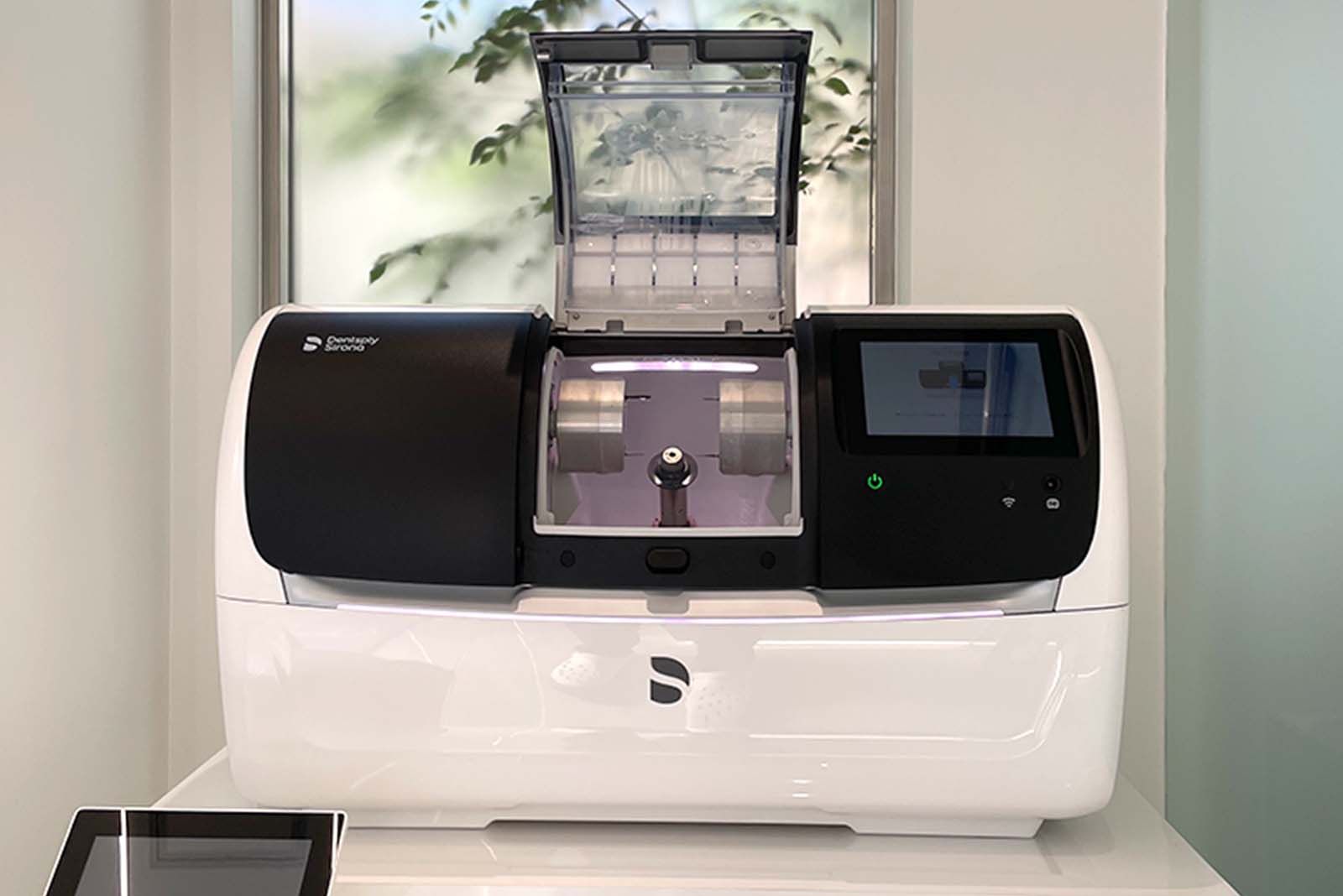
After the necessary preparation, we digitally record the shape of the tooth.
The restoration is designed to fit the remaining tooth and surrounding teeth.
The restoration is made and finished using the steps required for the selected material.
We check the fit and bite, make any necessary adjustments, and place the restoration.
When the tooth, material and restoration design are suitable, fabrication may be completed in the clinic on the same day.
Restorations that require an external dental laboratory, such as those with a more complex shape, generally take around two weeks.
“Same day” refers to making the restoration. The full treatment schedule depends on the extent of decay and any other care needed. We explain the method and timing during your consultation.
FEES & WARRANTY
The ceramic and zirconia restorations below are private treatments. We also provide eligible general dental care under Japan’s health insurance system.
| Restoration | Material | Fee | Warranty |
|---|---|---|---|
| Inlay | All-ceramic or zirconia | ¥77,000 (tax included) | 2 years |
| Crown | All-ceramic or zirconia | ¥132,000 (tax included) | 2 years |
| Veneer | All-ceramic or zirconia | ¥120,000 (tax included) | 2 years |
All listed fees include tax. Required examinations or additional procedures may affect the total. We explain inclusions and additional charges at your examination.
Each restoration has a two-year warranty. We explain its coverage and conditions before treatment.
QUESTIONS
Tell us your preferences for whiteness, natural appearance and tooth shape. You are welcome to bring reference photographs. We will consider options that work with your neighbouring teeth, lip line and bite.
Highly translucent materials are not suitable for every tooth. A darker underlying tooth may require greater masking ability. We consider the material, thickness, underlying tooth colour and required strength together.
Design images help us share your preferences and the direction of treatment. Results depend on your oral condition and the materials that can be used, so shade and shape are also assessed and refined at the try-in.
We assess decay, gums, the underlying teeth and your bite. If needed, decay or gum disease is treated first to prepare the mouth for restoration.
Topical anesthesia and slow electronic delivery help reduce discomfort, but everyone’s sensitivity differs, so a completely painless injection cannot be guaranteed.
Suitable restorations may be made on the same day. Decay or the condition of the tooth may require other treatment first, so the full course may take longer. Laboratory fabrication generally takes around two weeks.
Please share your preferences for appearance and cost. We explain suitable options after checking the tooth’s position, remaining structure and bite.
Veneers mainly change the color or shape of the front surface. Cavities or gum disease need appropriate treatment first. Veneers do not move teeth or correct the bite as orthodontic treatment does.
CONTACT
Tell us about your dental concerns and what you’d like to achieve.
06-6485-8725Please call during clinic hours.